
Blog
Why test your soil?
Many farmers apply the same amount of urea and DAP every season without knowing what the soil actually needs. This wastes money and can slowly damage the soil. A soil test shows the real level of nutrients so you can give the crop exactly what it needs.
What does a soil test report show?
- pH: whether the soil is acidic, neutral or alkaline. Most crops grow best between pH 6.5 and 7.5.
- EC (Electrical Conductivity): the level of salts in the soil.
- Organic carbon: a sign of soil health and organic matter.
- Major nutrients: Nitrogen (N), Phosphorus (P) and Potassium (K).
- Secondary and micro nutrients: Sulphur, Zinc, Iron, Copper, Manganese and Boron.
How to collect a soil sample (step by step)
- Take samples after harvest and before applying any fertilizer.
- Walk the field in a zig-zag pattern and mark 8 to 10 spots.
- At each spot, clear the grass and surface waste, then dig a V-shaped pit about 15 cm (6 inches) deep.
- Cut a thin slice of soil from one side of the pit and put it in a clean bucket.
- Mix all the soil well, spread it on a clean cloth, divide it into four parts and keep two opposite parts. Repeat until about half a kilo remains.
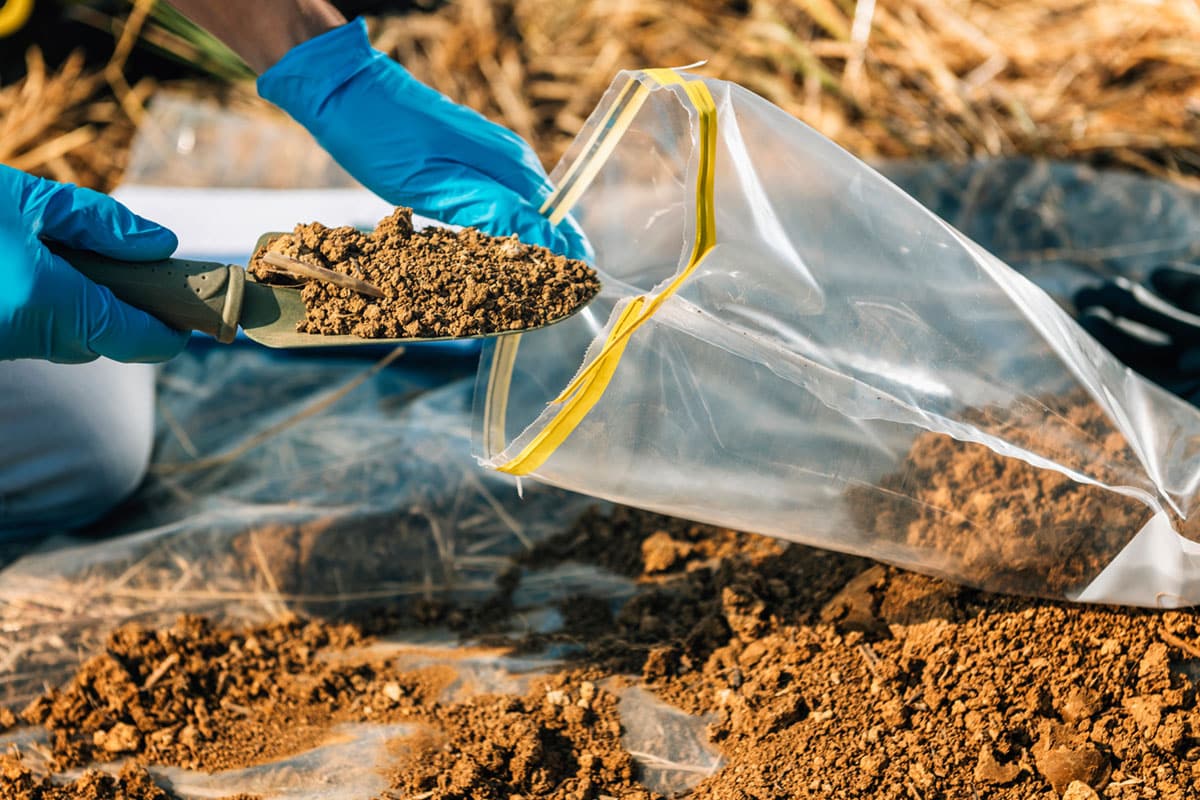
- Dry it in shade, fill it in a clean cloth or plastic bag and write your name, village, survey number and the last crop grown.
Avoid taking soil near trees, field bunds, compost pits, irrigation channels or places where fertilizer was just applied.
Where to get your soil tested
Submit the sample at your nearest government soil testing laboratory, Krishi Vigyan Kendra (KVK) or agriculture department office. Under the Soil Health Card scheme, farmers receive a card that lists nutrient levels and fertilizer recommendations for their field.
How to use the results
- Reduce fertilizer where the nutrient level is already high.
- Add gypsum for alkaline soil or lime for acidic soil when the report advises it.
- Apply zinc sulphate or other micronutrients only when the report shows a shortage.
- Add farmyard manure or compost when organic carbon is low.
Tip: Test your soil once every two to three years. Keep all your reports together so you can see how your soil is improving over time.