
Blog
What is drip irrigation?
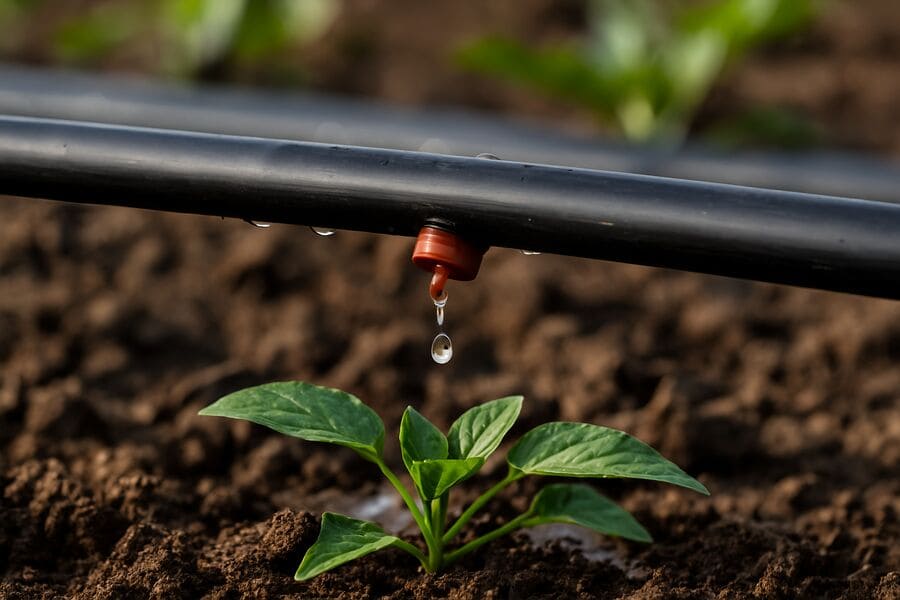
Drip irrigation is a method of watering crops where water flows through a network of pipes and small emitters (drippers) and falls slowly, drop by drop, right at the root zone of each plant. Instead of flooding the whole field, only the soil around the roots stays moist.
Why farmers are switching to drip
- Saves water: Drip systems commonly use 30 to 50 percent less water than flood irrigation, because very little is lost to evaporation or run-off.
- Better yield and quality: Plants get steady moisture every day, so growth is even and fruits are more uniform in size.
- Fewer weeds: The space between rows stays dry, so weeds have less chance to grow.
- Fertilizer through water: With a venturi or fertilizer tank you can mix water-soluble fertilizer into the line (fertigation) and feed every plant directly.
- Saves labour and electricity: The pump runs for shorter periods and fewer people are needed to manage water channels.
Main parts of a drip system
- Water source and pump – well, borewell, farm pond or canal.
- Filter – a screen or disc filter (and a sand filter for dirty water) to stop dirt from blocking the drippers.
- Main and sub-main pipes – PVC or HDPE pipes that carry water across the field.
- Laterals – thin black LLDPE pipes laid along each crop row.
- Drippers or inline emitters – release a fixed amount of water per hour, usually 2 to 8 litres.
Crops that benefit the most
Drip works very well for row crops and orchards: sugarcane, cotton, banana, pomegranate, grapes, papaya, tomato, chilli, brinjal, capsicum, watermelon and most vegetables.
Simple maintenance tips
- Clean the filter every few days, and daily if the water is muddy.
- Flush the laterals by opening their ends once a week.
- Check for blocked or leaking drippers while walking the field.
- Do acid or chlorine treatment once a season if your water is hard and leaves white salt deposits.
Subsidy support
Many state governments give a subsidy on drip and sprinkler systems under the micro-irrigation component of PMKSY (Per Drop More Crop). Small and marginal farmers often get a higher share. Visit your nearest agriculture or horticulture office to check the current rate and the list of approved companies before you buy.
Tip: Start with one or two acres, learn the system for one season, then expand. Many farmers recover the cost within two to three seasons through water, labour and yield savings.